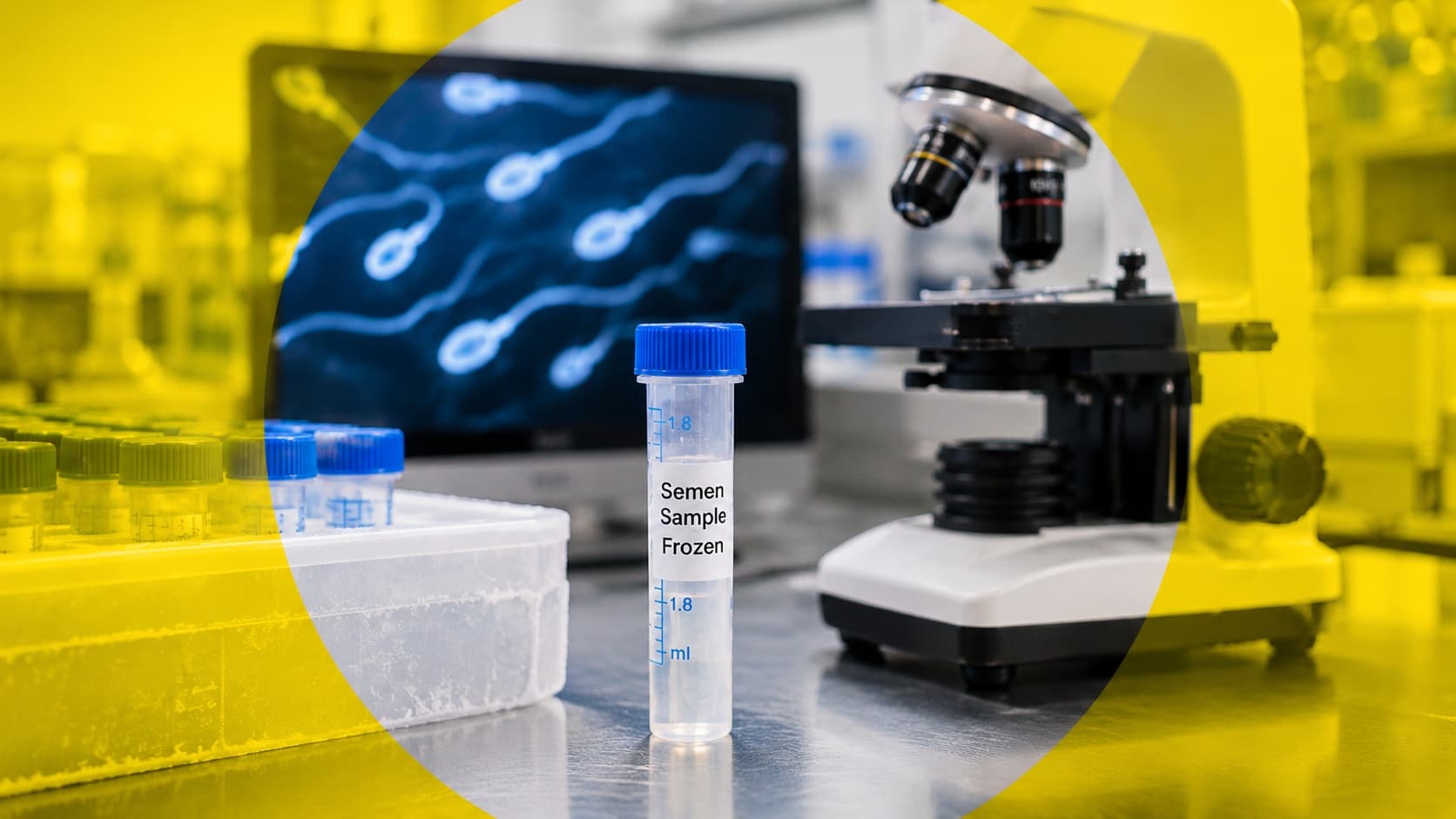
Here's a fact few people know at the start of the journey: it takes roughly two to three months for a sperm cell to form. The practical meaning is very real — what you do today will show up in the sample you give in two to three months. And since most surrogacy journeys have months between the decision and the actual freeze, you have a genuine window of opportunity. Better sperm quality = more fertilized eggs = more normal embryos from the same retrieval. Every improvement works in your favor.
What is actually measured
The sperm test (spermiogram) mainly checks the concentration, motility and shape of the sperm cells. Important to know: the results fluctuate. An illness with fever, a stressful stretch, even day-to-day variation — everything shows. So if you get a disappointing result, the first thing to do is simply repeat the test after a few weeks, before drawing conclusions.
What actually helps
Quit smoking — all of it. Tobacco harms every sperm parameter, and cannabis is on the list too. This is the biggest improvement available to most men.
Alcohol in moderation. Heavy, regular drinking hurts; an occasional glass of wine is not the story.
Stay away from heat. The testicles sit outside the body for a good reason — sperm production likes it cool. Hot tubs, saunas and a laptop on your lap on a regular basis all work against you during this period.
Move, but don't overdo it. Regular exercise helps; prolonged extreme training can actually hurt.
Sleep, and lower the stress. Enough sleep and low stress affect the hormones that produce sperm. Easy to say, hard to do — but it's one more good reason to start the journey calm.
Nutrition and supplements. A balanced diet rich in vegetables, fruit and nuts supports sperm quality. As for supplements (zinc, folic acid, vitamins) — there's logic to them, but don't assemble a cocktail off the internet; ask your doctor or your clinic what suits you.
Regular ejaculation. Long abstinence doesn't "store up quality" — the opposite. Regularity helps.
And yes, coffee is allowed. In moderation. Admit it, that's a relief.
If the numbers are still low
It's worth checking with a urologist for a varicocele — enlarged veins in the testicle, a kind of varicose vein. It's a common finding, usually with no noticeable symptoms, and one of the frequent causes of reduced sperm quality. The good news: it's diagnosed with a simple exam, and in suitable cases it can be treated. If the spermiogram keeps coming back underwhelming — this is a check worth doing before moving on.
Where this meets the surrogacy process
In a surrogacy journey, the sperm test happens anyway at the preliminary-testing stage, before the freeze itself. Meaning: before anything is shipped or frozen, the clinic will tell you whether the result is fine or whether some change is worth making. The test also looks at other things — for example the presence of white blood cells, which can point to inflammation — but for the purposes of this post, the message is simple: it's always good to improve, and always consult your clinic.
The bottom line
Two to three months of good habits are one of the cheapest, highest-return investments in the whole journey — no forms, no lawyers, and fully in your control. Start today, and let the biology work for you.
*This information is general and is not a substitute for personal medical advice.*