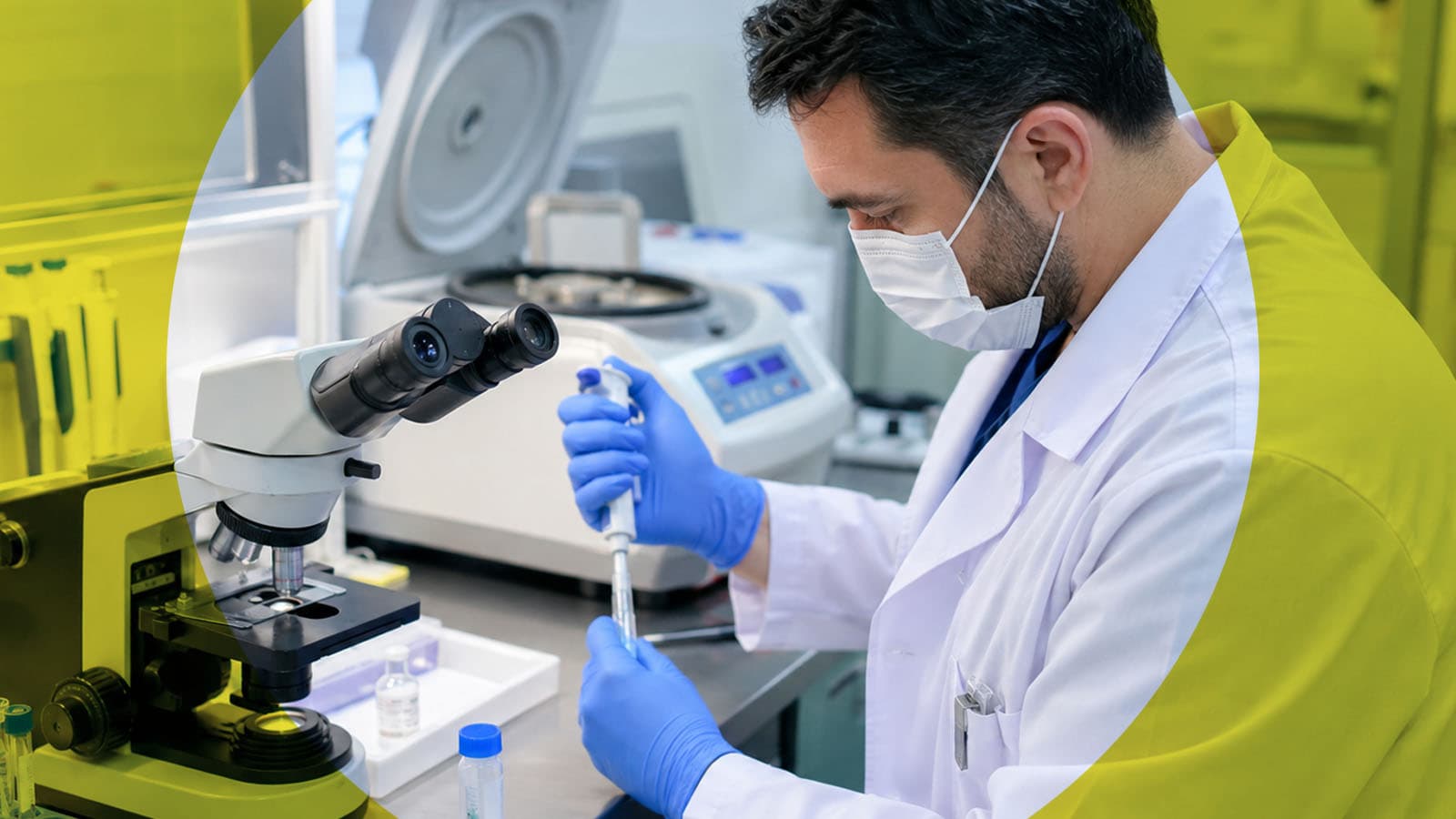
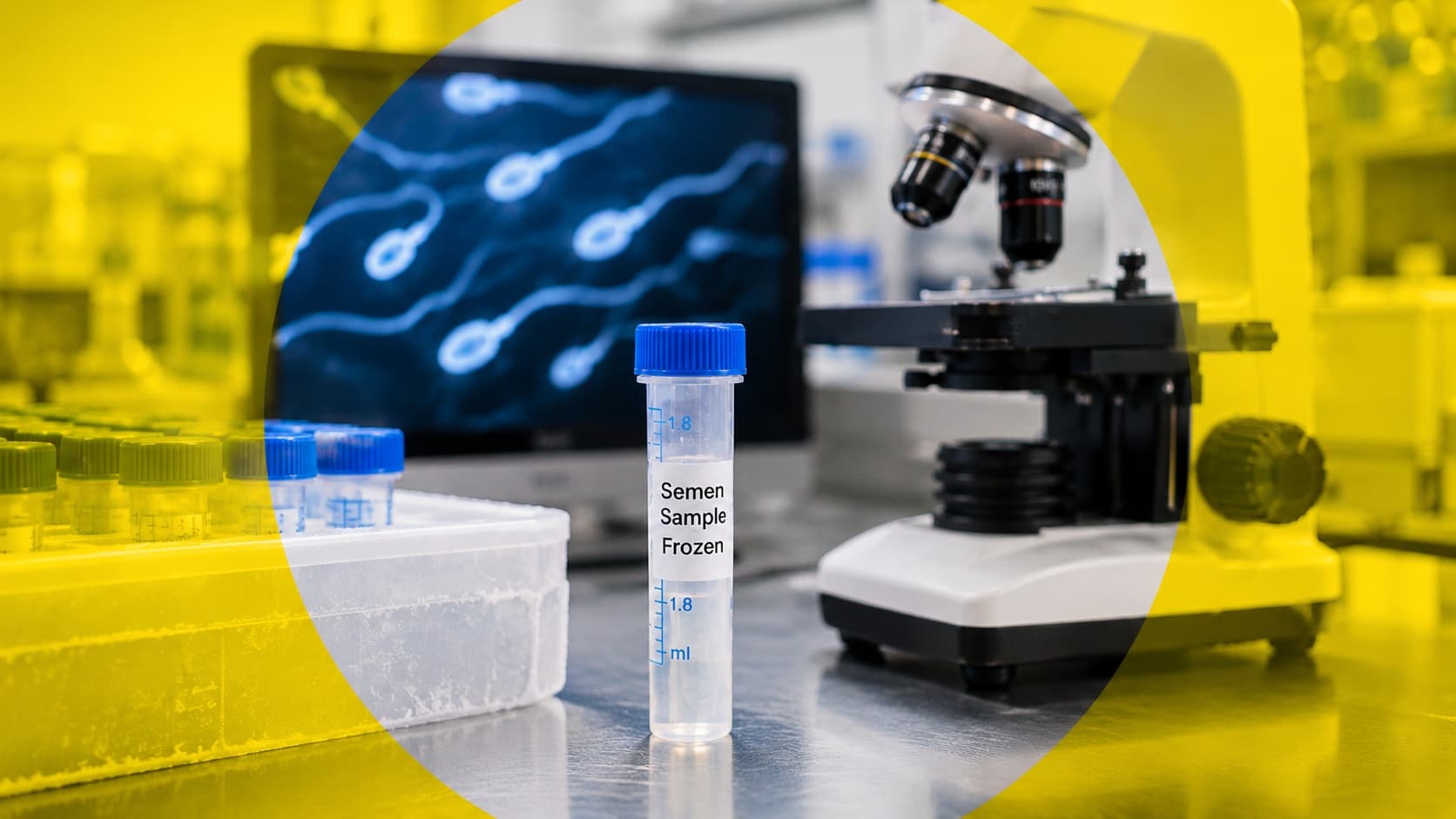
Before a clinic freezes your sperm — or accepts a frozen shipment — it will require a series of tests. Not bureaucracy: these tests protect everyone the process touches — the surrogate, the donor, and the baby on the way. The good news: most of them can be completed at a local clinic close to home, as routine blood and urine work — before you've touched the fertility clinic at all.
What's checked and why
The standard panel looks for diseases that can pass through sperm or endanger a pregnancy: HIV, hepatitis B and C, syphilis, gonorrhea and chlamydia, HTLV, and CMV — a virus most of us have carried at some point without knowing, but a first infection during pregnancy can be dangerous for the fetus, so it's checked.
It's important to understand the logic: a positive finding is almost never the end of the road. Clinics know how to work with nearly every situation — usually with an adapted protocol (sperm washing, for example). And if it's a simple infectious disease, sometimes all it takes is a few days of antibiotics and a repeat test confirming it's cleared — and you move on. What IS critical: that the clinic knows in advance. A finding discovered late stops a process; a finding known from the start gets a solution.
Why these tests exist at all — and what happens at the freeze itself
The preliminary tests exist so you and the clinic can prepare accordingly — and they are a requirement of everyone in the chain: your clinic, the US FDA, and the facility where the sperm will be frozen when it isn't your IVF clinic (as with sperm shipping).
Assuming all is well, the next time you meet these tests will be at the sperm freeze itself — at the clinic, or ahead of a shipment. There, at that same appointment, the same tests are taken again — this time with a dedicated FDA kit shipped to the US that same day, because the sample must be taken close to the freeze. And here is the point worth internalizing: if that sample reaches the US and comes back positive — the sperm you froze cannot be used. That is exactly why the preliminary round close to home is worth so much: it makes sure you don't reach that moment with a surprise.
Your partner too
If you're a couple and only one of you is providing sperm — it's recommended that both of you complete the screening. The reason is simple: preventing transmission risk between partners during the process. One simple test that closes a whole question.
What else the test shows
The pre-freeze sperm test also looks at things beyond infections — for example, white blood cells in the sample, which can point to an inflammation needing short treatment before the freeze. One more reason to do everything early: findings like these get a simple fix when there's time, and a headache when there isn't. And while you're preparing — you have a two-to-three-month window to improve the sperm quality itself; I've written about that separately.
*This information is general and is not a substitute for personal medical advice.*